
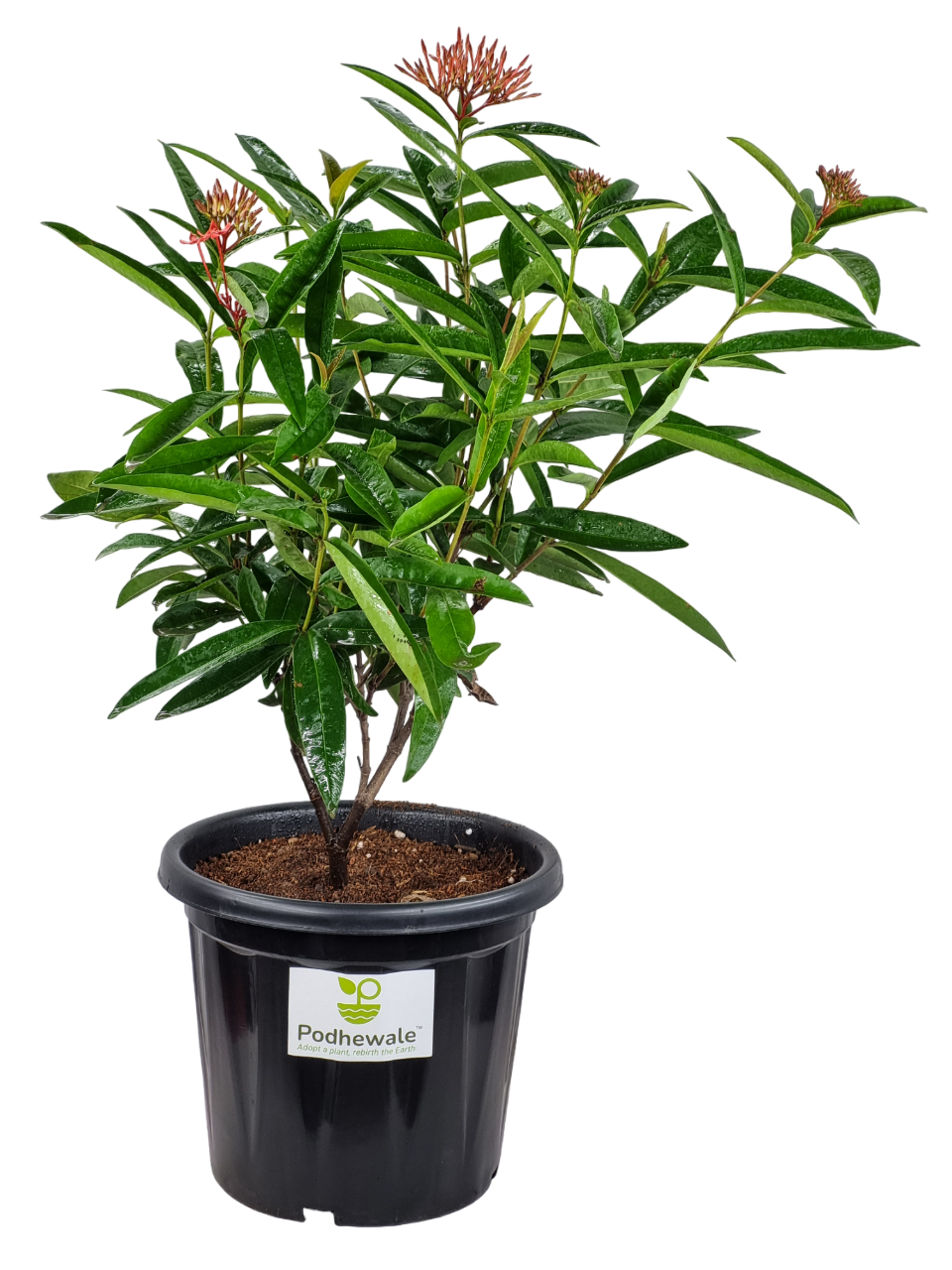
LightIxora loves light. For the best blooming, place it in a spot that receives bright, direct sunlight for at least 4 to 6 hours a day. While it can survive in partial shade, a lack of light will result in fewer flowers and leggy growth.Indoors, a south or west-facing window is ideal. Outdoors, ensure it isn't completely smothered by larger canopy trees.SoilIxora thrives in acidic soil (pH 5.0 to 5.8). Use a well-draining, peat-based potting mix. If the soil becomes too alkaline, the leaves may turn yellow (chlorosis). You can add organic matter or compost to keep the soil rich and maintain the acidity the plant craves.WaterThese plants prefer consistent moisture. During the growing season, water whenever the top inch of soil feels dry to the touch. Do not let the soil dry out completely, but avoid leaving the plant in "wet feet" or standing water, which causes root rot. In the winter, reduce watering slightly but keep the root ball from drying out entirely.Temperature and HumidityAs a true tropical native, Ixora thrives in warm environments between 65°F and 85°F. It is very sensitive to cold; temperatures below 50°F can cause leaf drop or damage. They love high humidity. If you are growing it indoors, mist the leaves regularly, use a pebble tray, or keep a humidifier nearby to mimic a tropical climate.FertilizerTo keep those vibrant flower clusters coming, feed your Ixora with a water-soluble fertilizer formulated for acid-loving plants (like those for Azaleas or Gardenias). Fertilize once a month during the spring and summer. Stop fertilizing in the winter months when the plant's metabolism slows down.


We want to give you 10% discount for your first order,
Use discount code at checkout
