
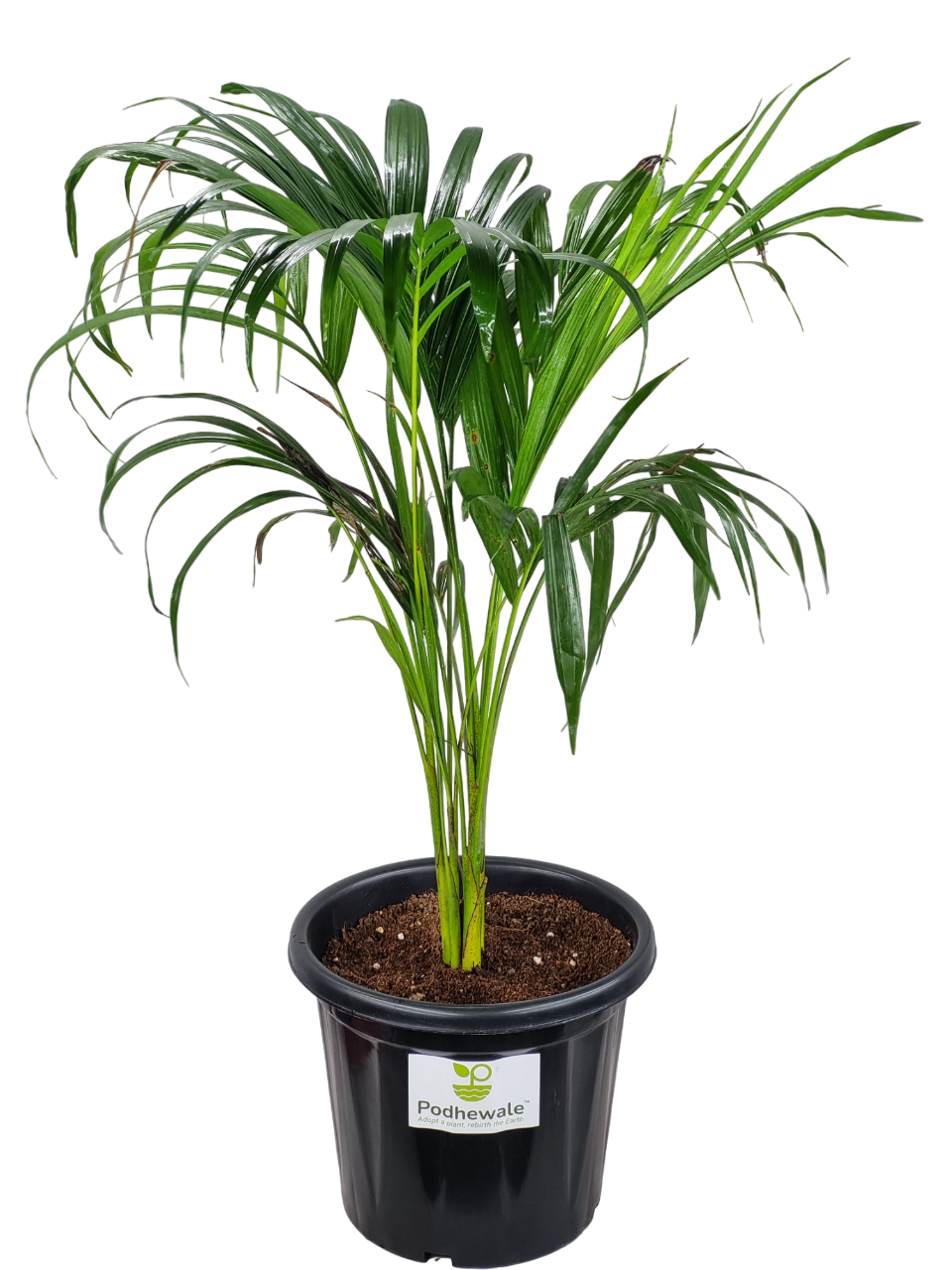
Sunlight Cat palms grow best with lots of bright, indirect light. Direct morning sunlight from an east-facing window is generally okay, but harsh direct sun can burn the leaves. Rotate your plant periodically to give all the foliage enough light exposure. Temperature and Humidity Cat palms prefer temperatures between 70 to 80 degrees during the day and in the 60-degree range at night. Temperatures below 50 degrees can damage its foliage. This plant benefits from at least 50 percent humidity. Watering Water your cat palm when the top of the soil has just begun to dry out. One of the most common issues with cat palms is root rot from overwatering, so do not water too often. Check saucers and cache pots to make sure your plant isn't sitting in excess water after watering. Fertilizer Feed cat palms with a balanced liquid houseplant fertilizer diluted to half strength once per month starting in early spring, or when you first see new growth at the start of the season. Stop fertilizing in the fall. Pruning and Maintenance Cat palms don't need regular pruning to look healthy, but they benefit from occasional tidying up. Use clean, sharp, sterilized shears or pruners to cut back yellow, dead, or damaged fronds at the base of the plant as they appear. Container and Size When choosing a container for your cat palm, terracotta or clay is best, because these materials wick away excess moisture. Though a cat palm ultimately may grow large, choose a pot that matches the plant's current size, for now. You want a container that is just slightly bigger than the root ball. If you put your cat palm in a container that is too large, you increase the likelihood of rot. Potting Soil and Drainage Cat palms don't like "wet feet," so it's important to plant them in a loose, fast-draining potting mix that will hold moisture while allowing excess water to drain away. You can purchase a pre-made mix specifically created for palms, or make your own by combining potting mix with equal parts pine bark and perlite. Potting and Repotting Cat palms are slow-growing plants, especially when kept indoors. They also don't respond well to having their roots disturbed, so it's better to let them become slightly potbound before repotting. Plan to repot your cat palm every three years or so. When repotting, choose a pot that is only a couple inches wider than the current pot. Carefully remove the plant from its old pot, place it in the newer pot, and backfill around it with a well-draining potting mix. Moving Cat Palm Outdoors for the Summer Moving a cat palm outdoors for the summer provides the plant with natural conditions and can boost its growth. However, it's important to do so only when the temperatures are correct, and the plant should not be placed in direct sunlight.


We want to give you 10% discount for your first order,
Use discount code at checkout
